Revue Médicale
Meva Clinic Hair Restoration Care Team
DHI (Implantation Directe de Cheveux)
Option sans rasage disponible. Implantation haute densité utilisant le Choi Pen spécialisé pour une guérison plus rapide.
Meva Clinic Hair Restoration Care Team
Informations sur les soins aux patients
Clinical Governance & Trichology Safety Standards
"DHI hair transplantation combines individual donor-graft harvesting through Follicular Unit Excision with implanter-assisted placement in the recipient area. At Meva Clinic, the placement workflow is integrated with donor assessment, individualized hairline design and graft-allocation priorities to support natural-looking coverage, donor-aware planning and long-term visual balance."
Cette page a été révisée dans le cadre du parcours de révision médicale spécialisée de Meva Clinic. L'éligibilité finale au traitement, l'attribution du médecin traitant, la planification chirurgicale et les décisions médicales ne sont confirmées qu'après examen des antécédents médicaux, consultation en personne, examens diagnostiques, évaluation de l'anesthésie et disponibilité du médecin.
À propos de cette procédure
Pourquoi choisir Meva Clinic ?
Option sans rasage disponible. Implantation haute densité utilisant le Choi Pen spécialisé pour une guérison plus rapide.
La discipline de restauration capillaire à la Clinique Meva redéfinit l'esthétique de la ligne capillaire naturelle en utilisant des innovations de micro-greffes premium à faible traumatisme. En utilisant des lames en saphir de précision pour des incisions micro-canaux en forme de V et des méthodologies d'implantation de l'élite DHI Choi Pen, nos équipes cliniques spécialisées garantissent une bonne rétention des greffons grâce à une manipulation minutieuse et aux soins postopératoires. Conçues pour traiter l'alopécie avancée et l'amincissement sans compromettre la zone donneuse, toutes les interventions de transplantation capillaire comprennent une anesthésie locale axée sur le confort du patient, une cartographie informatisée des unités folliculaires, un kit de soins médicaux premium et un support de suivi à long terme.
Informations sur les soins aux patients
Équipe de soins en greffe de cheveux Meva Clinic
Clinical Governance & Trichology Safety Standards
Standardized Hair Follicle Implantation & Trichology Guidelines
Cette page a été révisée dans le cadre du parcours de révision médicale spécialisée de Meva Clinic. L'éligibilité finale au traitement, l'attribution du médecin traitant, la planification chirurgicale et les décisions médicales ne sont confirmées qu'après examen des antécédents médicaux, consultation en personne, examens diagnostiques, évaluation de l'anesthésie et disponibilité du médecin.
Est-ce que ce traitement est pour moi ?
Chute de cheveux chez la femme
Ceux qui ne se rasent pas
Zones d’amincissement spécifiques
Plan de Soins Complet pour Patients Internationaux
Transfert aéroport privé selon le plan de soins confirmé
Hébergement en hôtel partenaire selon le plan confirmé
Assistance dédiée au patient tout au long du parcours de soins confirmé
Conseils et matériel de soins postopératoires selon le plan de traitement confirmé
Suivi postopératoire selon les recommandations médicales individuelles
La procédure clinique
Transfert folliculaire direct sans ouverture de canal séparée.
1. Donor Assessment and Individualized Hairline Planning
Assess hair-loss pattern, donor capacity, facial proportions, recipient coverage priorities and long-term appearance. Confirm the planned hairline and graft distribution before treatment.
2. Follicular Unit Excision
Harvest follicular units individually from a clinically appropriate donor area using suitable micro-punch instrumentation. Implanter pens are used later for graft placement, not donor harvesting.
3. Graft Preparation and Implanter Loading
Inspect and organize extracted follicular units according to the treatment plan. Load grafts carefully into the selected implanter system to maintain follicle viability.
4. Recipient-Site and Placement Planning
Confirm the intended angle, direction, spacing and distribution for the hairline and treated areas. The exact site-creation workflow depends on the clinical protocol.
5. Implanter-Assisted Graft Placement
Place grafts using implanter pens according to the individualized plan, supporting controlled depth, angle and distribution across the recipient zone.
6. Aftercare and Clinical Follow-Up
Provide the first-wash plan, early-care instructions and structured follow-up pathway, connected directly with Meva Clinic clinical care.
Parcours de récupération et de transformation
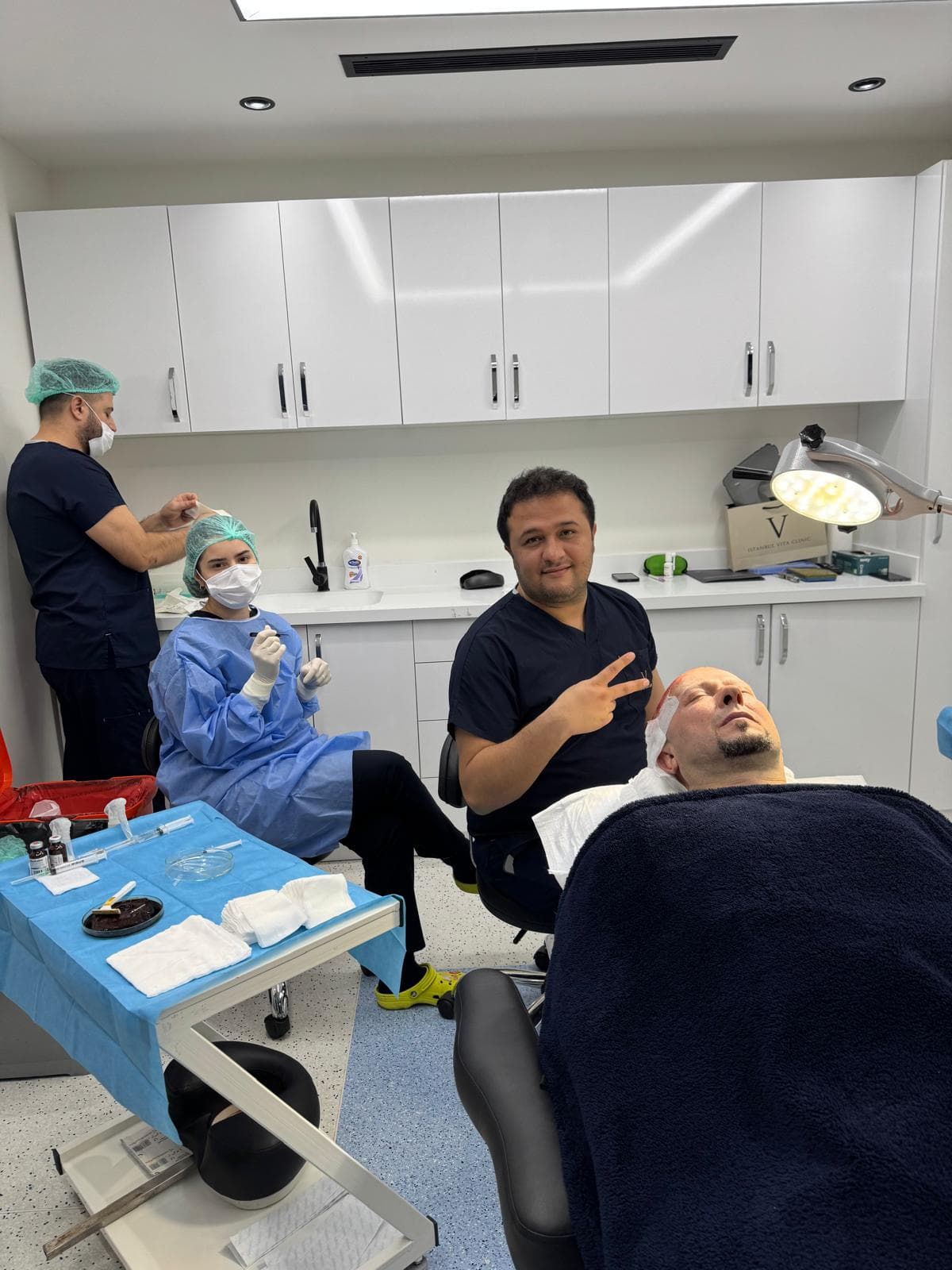
Initial healing and gentle scalp washing demonstrated at the clinic; donor and recipient areas protected according to aftercare instructions.
Superficial crusts over recipient sites gradually soften and shed through gentle daily cleansing without force.
Transplanted hair shafts commonly shed as follicles enter a temporary resting phase before new growth begins.
Fine new hair shafts begin to emerge from the recipient scalp and progressively gain calibre over time.
Noticeable improvement in coverage and hair calibre develops across the treated areas.
Overall hair calibre, coverage and visual density are assessed through Meva Clinic's structured clinical follow-up as maturation continues.
L'avantage Meva
Moins de traumatismes au cuir chevelu et une densité plus élevée.
Directives médicales et protocoles de sécurité
Treatment pathways are coordinated with selected specialist medical partners and accredited provider institutions, depending on the procedure and doctor assessment. Vous trouverez ci-dessous les directives cliniques, les protocoles de sécurité et la documentation médicale de référence pour cette procédure.
Indications et éligibilité
- Candidates for DHI hair transplant in Turkey with a stable hair loss pattern and realistic expectations of density.
- Patients with an adequate donor area (occipital and temporal regions) verified during our detailed donor area assessment.
- International hair transplant patients comparing DHI hair transplant in Istanbul with other advanced micro-grafting techniques.
- Adults who require a direct hair implantation approach for natural hairline planning or target area density enhancement.
- Individuals who are medically suitable for local anesthesia and committed to post-operative care and hair transplant travel planning.
Contre-indications et non recommandé
- Diffuse Unpatterned Alopecia (DUPA) or unstable donor areas where healthy follicles are insufficient for graft extraction.
- Active scalp disorders such as untreated psoriasis, severe seborrheic dermatitis, or lichen planopilaris.
- Severe, uncontrolled metabolic conditions, active coagulation disorders, or medical instability under local anesthesia.
- Extremely weak donor area where graft extraction would cause donor area thinning or overharvesting.
- Heavy smoking or history of non-compliance with post-operative hygiene, washing, or clinical guidance.
Évaluation préopératoire et examens diagnostiques
Pre-Arrival Photo & Document Review: Remote donor assessment and preliminary hair restoration planning for international patients.
Trichoscopic Scalp Evaluation: Microscopic mapping of follicular unit density, caliber, and graft extraction capacity.
Hairline Design Istanbul Consultation: Collaborative hairline planning taking into account facial symmetry and age-appropriate design.
Standard Laboratory Profile: Coagulation tests (PT/INR), blood counts, and infectious disease screenings.
Medical Clearance Check: In-person evaluation of scalp condition, cardiovascular readiness, and anesthesia suitability.
Risques potentiels et complications
In compliance with transparent clinical reporting, Meva Clinic ensures patients are fully informed of the physiological risks associated with surgical procedures through accredited partner-hospital safety protocols where clinically appropriate.
Normal shedding of native or transplanted hair shafts post-procedure, resolving within 3-4 months.
Mild forehead or facial edema, managed with rest, head elevation, and cold compression.
Minor hair follicle irritation in recipient areas, treated with antiseptic solutions or topical antibiotics.
Potential overharvesting of the occipital region, mitigated by strict adherence to donor area limits.
Variation in graft retention caused by scalp circulation, compliance, or individual tissue response.
Minor irregularities requiring a secondary density enhancement session in selected cases.
Attentes réalistes et résultats
Based on Meva Clinic's internal clinical follow-up, graft growth has been observed to approach 99% in clinically suitable patients who follow the recommended aftercare pathway. The observation reflects the complete clinical pathway—including donor assessment, graft handling, placement and aftercare—rather than an outcome guaranteed by the implanter technique alone.
Politique de retouche et de suivi
Meva Clinic Lifetime Graft Growth Assurance: Meva Clinic evaluates graft growth after the full maturation period (12–18 months). If clinically meaningful insufficient growth is confirmed, an eligible patient may receive a complimentary corrective procedure, subject to donor availability, clinical suitability, safety and adherence to the recommended aftercare pathway. Travel, accommodation and personal expenses are not included unless separately confirmed in writing.
Références médicales faisant autorité et études
- [1]International Society of Hair Restoration Surgery (ISHRS): Core Curriculum Guidelines on Follicular Unit Extraction and Implanter Pen Usage.Voir la source
- [2]Journal of Cutaneous and Aesthetic Surgery: 'Direct Hair Transplantation: A Modified Follicular Unit Extraction Technique' (2013).Voir l'étude
- [3]American Academy of Dermatology (AAD): Clinical Guidelines on the Diagnosis and Management of Androgenetic Alopecia.Voir la source
Avertissement médical : The hair restoration information on this page is for educational purposes only. Final suitability, hairline design, and graft estimates are determined exclusively after face-to-face donor area assessment and medical evaluation.
Questions Fréquemment Posées
Traitements associés
Technique Mixte Meva (Saphir + DHI)
Une technique hybride de restauration capillaire associant Sapphire FUE pour la ligne frontale et DHI pour la planification de la densité.
Greffe de Cheveux Sapphire FUE
Création de canaux sur le site receveur à l'aide de lames à pointe de saphir lors des procédures FUE.
Greffe de cheveux DHI vs FUE
Évaluation clinique comparative entre le placement assisté par implanteur DHI et les protocoles de placement dans des sites receveurs créés au préalable après un prélèvement FUE.
Greffe de Cheveux Sans Rasage
Une approche chirurgicale spécialisée de restauration capillaire pour les patients éligibles souhaitant préserver la longueur et l'apparence habituelle de leurs cheveux. La planification médicale personnalisée intègre les ressources de la zone donneuse, la stabilité de la chute et des objectifs de densité réalistes au sein du modèle de soins coordonnés par Meva Clinic.
Articles et informations médicales
L'Évolution du Sapphire FUE : Principes Chirurgicaux, Zone Donneuse et Résultats
Analyse médicale de l'utilisation des lames en saphir en greffe FUE, de la gestion du capital donneur et des différences avec la méthode DHI.
Évolution et Récupération après Greffe Capillaire : Phases Biologiques, Shock Loss et Soins
Guide médical détaillant les soins du cuir chevelu, l'élimination des croûtes, la chute temporaire physiologique et la maturation des cheveux selon l'AAD et l'ISHRS.
DHI vs Sapphire FUE : Différences Cliniques, Mécanismes d'Implantation et Choix Médical
Comparatif médical objectif entre l'extraction FUE associée aux stylos Choi (DHI) et les micro-lames en saphir (Sapphire FUE).
Détails de la procédure
Séjour à l'hôpital
Aucune
Forfait hôtel
3 nuits
Retour au travail
3 jours
Anesthésie
Locale
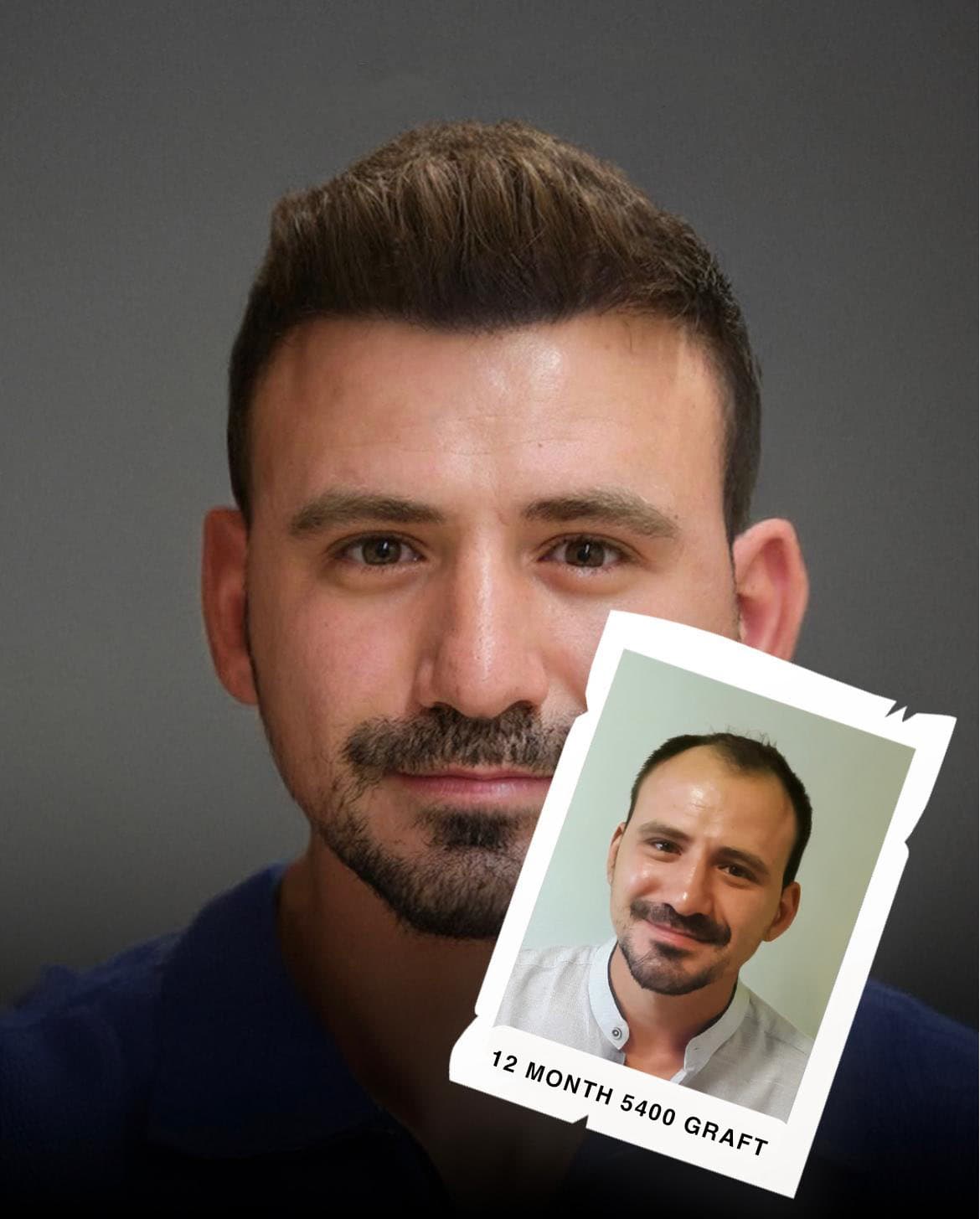
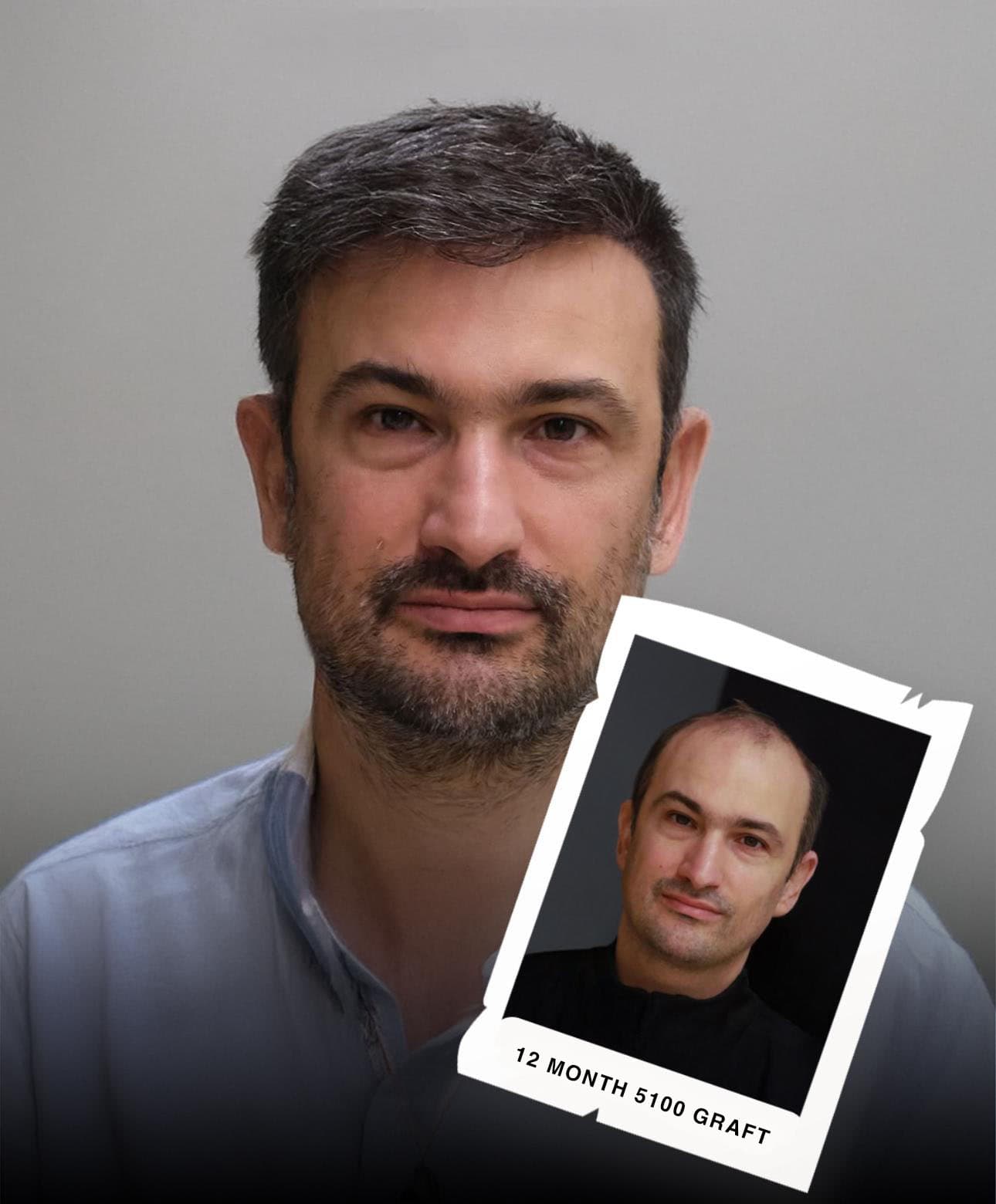
Résultats cliniques
Résultats réels de nos patients. Découvrez les transformations obtenues par notre équipe médicale.
.jpeg&w=3840&q=75)
.jpeg&w=3840&q=75)
.jpeg&w=3840&q=75)
.jpeg&w=3840&q=75)
.jpeg&w=3840&q=75)
.jpeg&w=3840&q=75)
.jpeg&w=3840&q=75)
.jpeg&w=3840&q=75)
.jpeg&w=3840&q=75)
.jpeg&w=3840&q=75)
.jpeg&w=3840&q=75)
.jpeg&w=3840&q=75)
.jpeg&w=3840&q=75)
.jpeg&w=3840&q=75)
.jpeg&w=3840&q=75)
.jpeg&w=3840&q=75)
.jpeg&w=3840&q=75)
.jpeg&w=3840&q=75)
.jpeg&w=3840&q=75)