Revisión Médica
Meva Clinic Hair Restoration Care Team
DHI (Implantación Directa de Cabello)
Opción sin afeitado disponible. Implantación de alta densidad utilizando el Choi Pen especializado para una curación más rápida.
Meva Clinic Hair Restoration Care Team
Información de Atención al Paciente
Clinical Governance & Trichology Safety Standards
"DHI hair transplantation combines individual donor-graft harvesting through Follicular Unit Excision with implanter-assisted placement in the recipient area. At Meva Clinic, the placement workflow is integrated with donor assessment, individualized hairline design and graft-allocation priorities to support natural-looking coverage, donor-aware planning and long-term visual balance."
Esta página ha sido revisada bajo el trayecto de revisión médica especializada de Meva Clinic. La idoneidad final del tratamiento, la asignación del médico cirujano, la planificación quirúrgica y las decisiones médicas se confirman únicamente después de la revisión del historial médico, la consulta en persona, las pruebas de diagnóstico, la evaluación de la anestesia y la disponibilidad del médico.
Acerca de este procedimiento
¿Por qué elegir Meva Clinic?
Opción sin afeitado disponible. Implantación de alta densidad utilizando el Choi Pen especializado para una curación más rápida.
La disciplina de restauración capilar en Meva Clinic redefine la estética natural de la línea del cabello utilizando innovaciones de microinjertos premium y de bajo trauma. Utilizando cuchillas de zafiro de precisión para incisiones en microcanales en forma de V y metodologías de implantación de élite DHI Choi Pen, nuestros equipos clínicos especializados aseguran una óptima retención del injerto mediante una manipulación cuidadosa y cuidados posteriores. Diseñadas para tratar la alopecia avanzada y el adelgazamiento sin comprometer la zona donante, todas las intervenciones de trasplante capilar incluyen anestesia local orientada al confort del paciente, mapeo asistido por ordenador de unidades foliculares, un kit de seguimiento médico premium y un soporte de seguimiento a largo plazo.
Información de Atención al Paciente
Equipo de atención en restauración capilar de Meva Clinic
Clinical Governance & Trichology Safety Standards
Standardized Hair Follicle Implantation & Trichology Guidelines
Esta página ha sido revisada bajo el trayecto de revisión médica especializada de Meva Clinic. La idoneidad final del tratamiento, la asignación del médico cirujano, la planificación quirúrgica y las decisiones médicas se confirman únicamente después de la revisión del historial médico, la consulta en persona, las pruebas de diagnóstico, la evaluación de la anestesia y la disponibilidad del médico.
¿Es este tratamiento para mí?
Caída del cabello femenino
Buscadoras sin afeitado
Áreas específicas de adelgazamiento
Plan Completo de Atención al Paciente Internacional
Traslado privado al aeropuerto según el plan de atención confirmado
Alojamiento en hotel asociado según el plan confirmado
Soporte dedicado al paciente durante el itinerario de atención confirmado
Orientación y materiales de cuidados posteriores según el plan de tratamiento confirmado
Soporte de seguimiento según las recomendaciones médicas individuales
El procedimiento clínico
Transferencia directa de folículos sin apertura de canales separados.
1. Donor Assessment and Individualized Hairline Planning
Assess hair-loss pattern, donor capacity, facial proportions, recipient coverage priorities and long-term appearance. Confirm the planned hairline and graft distribution before treatment.
2. Follicular Unit Excision
Harvest follicular units individually from a clinically appropriate donor area using suitable micro-punch instrumentation. Implanter pens are used later for graft placement, not donor harvesting.
3. Graft Preparation and Implanter Loading
Inspect and organize extracted follicular units according to the treatment plan. Load grafts carefully into the selected implanter system to maintain follicle viability.
4. Recipient-Site and Placement Planning
Confirm the intended angle, direction, spacing and distribution for the hairline and treated areas. The exact site-creation workflow depends on the clinical protocol.
5. Implanter-Assisted Graft Placement
Place grafts using implanter pens according to the individualized plan, supporting controlled depth, angle and distribution across the recipient zone.
6. Aftercare and Clinical Follow-Up
Provide the first-wash plan, early-care instructions and structured follow-up pathway, connected directly with Meva Clinic clinical care.
Viaje de Recuperación y Transformación
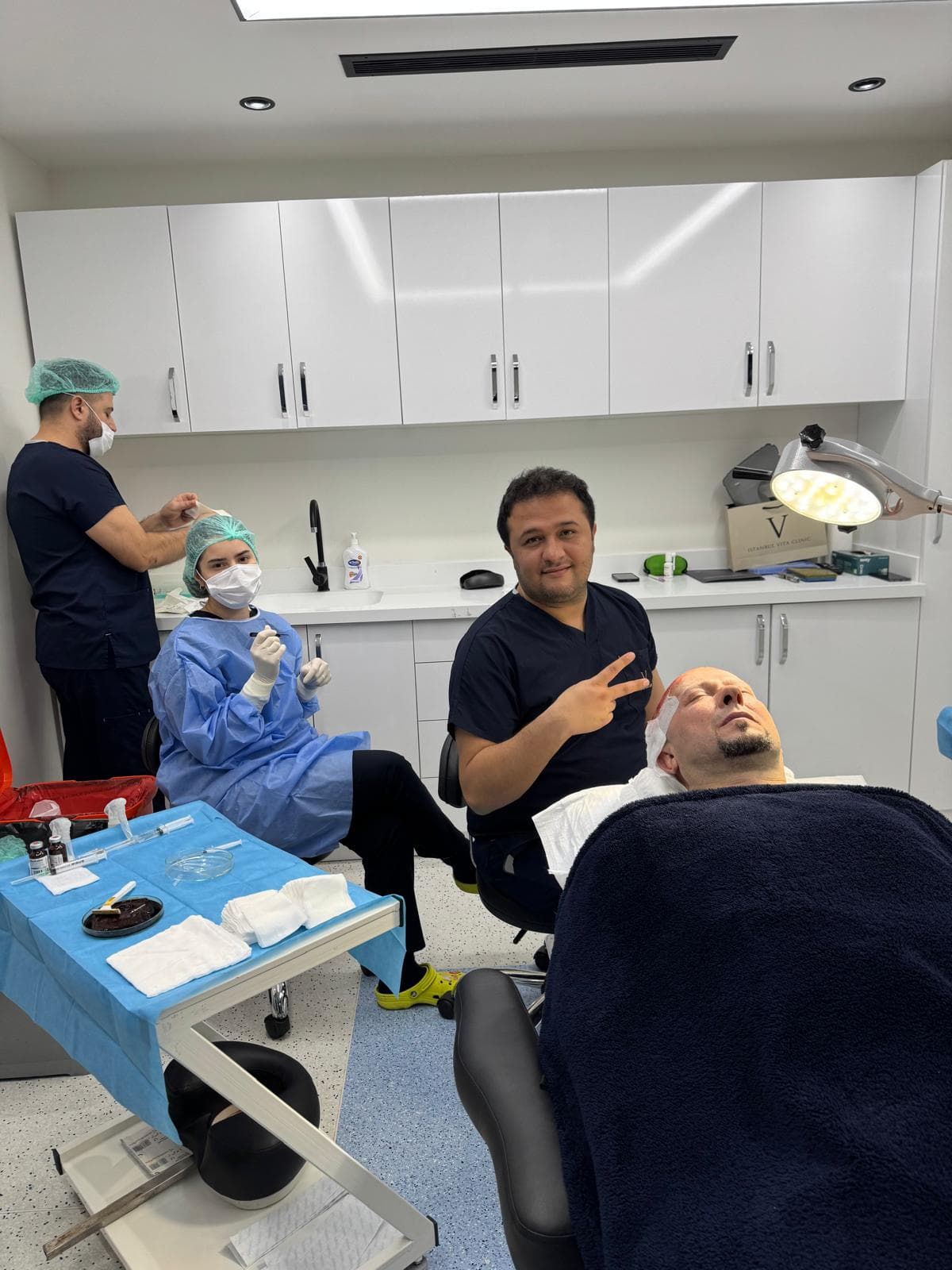
Initial healing and gentle scalp washing demonstrated at the clinic; donor and recipient areas protected according to aftercare instructions.
Superficial crusts over recipient sites gradually soften and shed through gentle daily cleansing without force.
Transplanted hair shafts commonly shed as follicles enter a temporary resting phase before new growth begins.
Fine new hair shafts begin to emerge from the recipient scalp and progressively gain calibre over time.
Noticeable improvement in coverage and hair calibre develops across the treated areas.
Overall hair calibre, coverage and visual density are assessed through Meva Clinic's structured clinical follow-up as maturation continues.
La Ventaja Meva
Menos traumatismo en el cuero cabelludo y mayor densidad.
Pautas médicas y protocolos de seguridad
Treatment pathways are coordinated with selected specialist medical partners and accredited provider institutions, depending on the procedure and doctor assessment. A continuación se presentan las guías clínicas, protocolos de seguridad y documentación médica de referencia para este procedimiento.
Indicaciones y elegibilidad
- Candidates for DHI hair transplant in Turkey with a stable hair loss pattern and realistic expectations of density.
- Patients with an adequate donor area (occipital and temporal regions) verified during our detailed donor area assessment.
- International hair transplant patients comparing DHI hair transplant in Istanbul with other advanced micro-grafting techniques.
- Adults who require a direct hair implantation approach for natural hairline planning or target area density enhancement.
- Individuals who are medically suitable for local anesthesia and committed to post-operative care and hair transplant travel planning.
Contraindicaciones y no recomendado
- Diffuse Unpatterned Alopecia (DUPA) or unstable donor areas where healthy follicles are insufficient for graft extraction.
- Active scalp disorders such as untreated psoriasis, severe seborrheic dermatitis, or lichen planopilaris.
- Severe, uncontrolled metabolic conditions, active coagulation disorders, or medical instability under local anesthesia.
- Extremely weak donor area where graft extraction would cause donor area thinning or overharvesting.
- Heavy smoking or history of non-compliance with post-operative hygiene, washing, or clinical guidance.
Evaluación preoperatoria y pruebas diagnósticas
Pre-Arrival Photo & Document Review: Remote donor assessment and preliminary hair restoration planning for international patients.
Trichoscopic Scalp Evaluation: Microscopic mapping of follicular unit density, caliber, and graft extraction capacity.
Hairline Design Istanbul Consultation: Collaborative hairline planning taking into account facial symmetry and age-appropriate design.
Standard Laboratory Profile: Coagulation tests (PT/INR), blood counts, and infectious disease screenings.
Medical Clearance Check: In-person evaluation of scalp condition, cardiovascular readiness, and anesthesia suitability.
Riesgos potenciales y complicaciones
In compliance with transparent clinical reporting, Meva Clinic ensures patients are fully informed of the physiological risks associated with surgical procedures through accredited partner-hospital safety protocols where clinically appropriate.
Normal shedding of native or transplanted hair shafts post-procedure, resolving within 3-4 months.
Mild forehead or facial edema, managed with rest, head elevation, and cold compression.
Minor hair follicle irritation in recipient areas, treated with antiseptic solutions or topical antibiotics.
Potential overharvesting of the occipital region, mitigated by strict adherence to donor area limits.
Variation in graft retention caused by scalp circulation, compliance, or individual tissue response.
Minor irregularities requiring a secondary density enhancement session in selected cases.
Expectativas realistas y resultados
Based on Meva Clinic's internal clinical follow-up, graft growth has been observed to approach 99% in clinically suitable patients who follow the recommended aftercare pathway. The observation reflects the complete clinical pathway—including donor assessment, graft handling, placement and aftercare—rather than an outcome guaranteed by the implanter technique alone.
Política de revisión y seguimiento
Meva Clinic Lifetime Graft Growth Assurance: Meva Clinic evaluates graft growth after the full maturation period (12–18 months). If clinically meaningful insufficient growth is confirmed, an eligible patient may receive a complimentary corrective procedure, subject to donor availability, clinical suitability, safety and adherence to the recommended aftercare pathway. Travel, accommodation and personal expenses are not included unless separately confirmed in writing.
Referencias médicas autorizadas y estudios
- [1]International Society of Hair Restoration Surgery (ISHRS): Core Curriculum Guidelines on Follicular Unit Extraction and Implanter Pen Usage.Ver fuente
- [2]Journal of Cutaneous and Aesthetic Surgery: 'Direct Hair Transplantation: A Modified Follicular Unit Extraction Technique' (2013).Ver estudio
- [3]American Academy of Dermatology (AAD): Clinical Guidelines on the Diagnosis and Management of Androgenetic Alopecia.Ver fuente
Aviso médico: The hair restoration information on this page is for educational purposes only. Final suitability, hairline design, and graft estimates are determined exclusively after face-to-face donor area assessment and medical evaluation.
Preguntas Frecuentes
Tratamientos relacionados
Técnica Mixta Meva (Zafiro + DHI)
Una técnica híbrida de restauración capilar que combina Sapphire FUE para la línea del cabello y DHI para la planificación de la densidad.
Trasplante de Cabello Sapphire FUE
Creación de canales en la zona receptora mediante hojas con punta de zafiro durante procedimientos FUE.
Injerto Capilar DHI vs FUE
Evaluación clínica comparativa entre los flujos de trabajo DHI (Direct Hair Implantation) y FUE (Follicular Unit Excision) para guiar una planificación personalizada.
Trasplante Capilar Sin Rapar
Una opción especializada de restauración capilar para pacientes elegibles que desean conservar la longitud y el aspecto habitual de su cabello. El procedimiento se planifica según la capacidad de la zona donante, el patrón de caída y los objetivos realistas de cobertura, dentro del modelo de atención de Meva Clinic coordinado por el médico.
Artículos e información médica
La Evolución de Sapphire FUE: Principios Quirúrgicos, Seguridad Donante y Resultados
Revisión clínica sobre las hojas de zafiro en la técnica FUE, la gestión responsable de la zona donante y las diferencias técnicas con el método DHI.
Evolución y Recuperación del Trasplante Capilar: Fases Biológicas, Shock Loss y Cuidados
Guía médica sobre el cuidado del cuero cabelludo, desprendimiento de costras, caída fisiológica temporal y maduración del cabello según AAD e ISHRS.
DHI frente a Sapphire FUE: Diferencias Clínicas, Mecánica de Injerto y Elección de Técnica
Comparativa médica sobre la combinación de extracción FUE con implanter Choi (DHI) o microhojas de zafiro (Sapphire FUE) en la restauración capilar.
Detalles del procedimiento
Estancia hospitalaria
Ninguna
Paquete de hotel
3 Noches
Regresar al trabajo
3 dias
Anestesia
Local
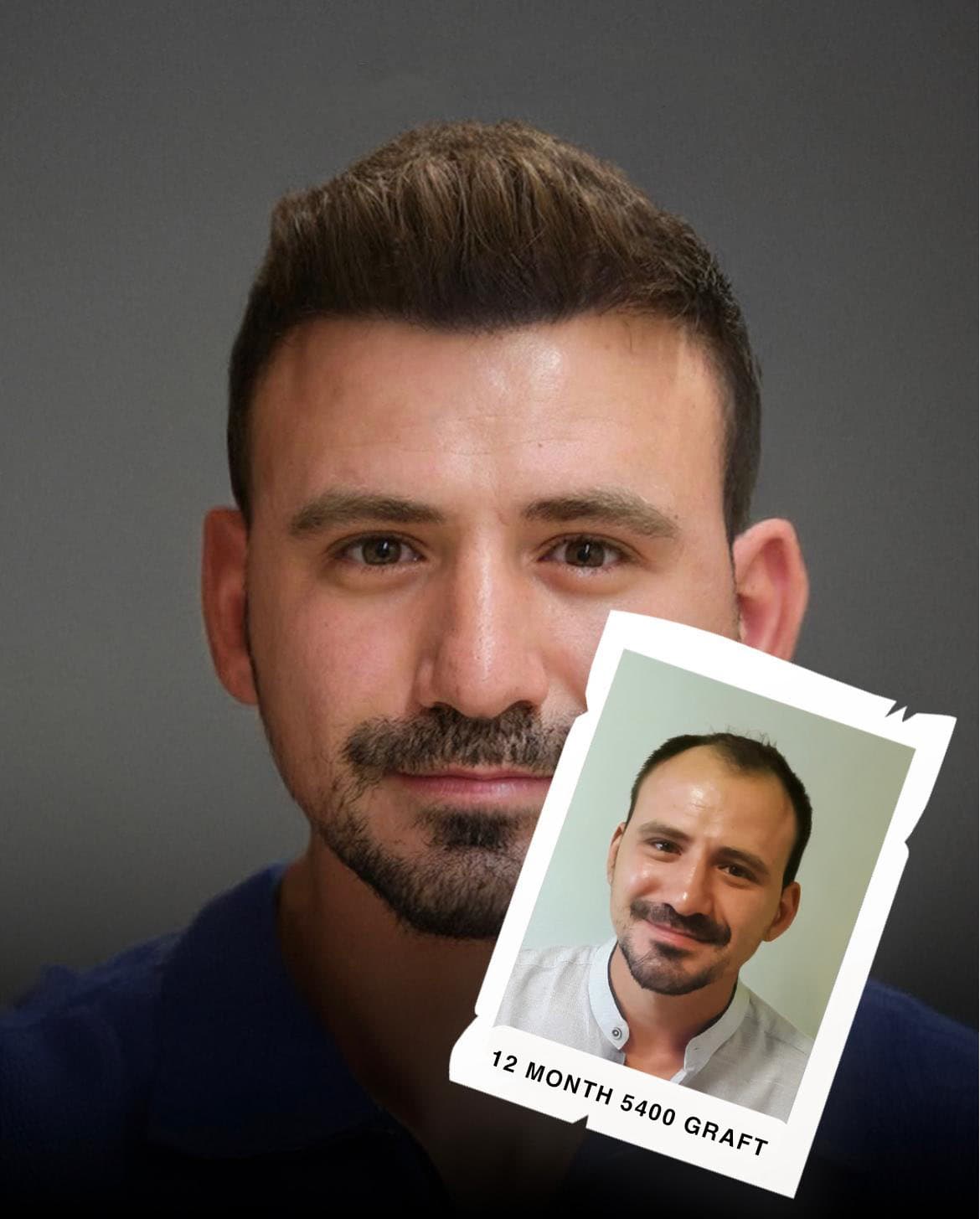
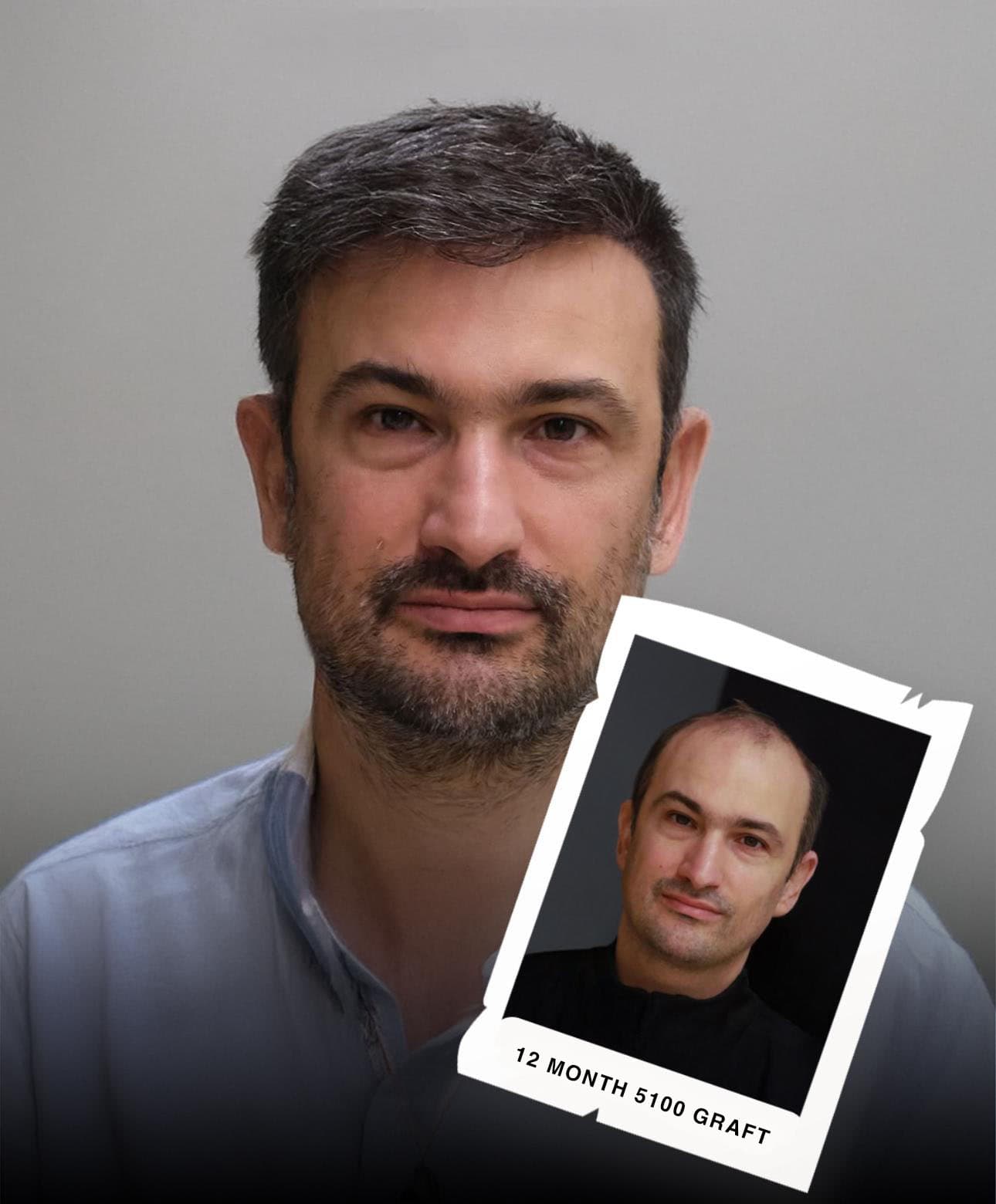
Resultados clínicos
Resultados reales de nuestros pacientes. Conozca las transformaciones logradas por nuestro equipo médico experto.
.jpeg&w=3840&q=75)
.jpeg&w=3840&q=75)
.jpeg&w=3840&q=75)
.jpeg&w=3840&q=75)
.jpeg&w=3840&q=75)
.jpeg&w=3840&q=75)
.jpeg&w=3840&q=75)
.jpeg&w=3840&q=75)
.jpeg&w=3840&q=75)
.jpeg&w=3840&q=75)
.jpeg&w=3840&q=75)
.jpeg&w=3840&q=75)
.jpeg&w=3840&q=75)
.jpeg&w=3840&q=75)
.jpeg&w=3840&q=75)
.jpeg&w=3840&q=75)
.jpeg&w=3840&q=75)
.jpeg&w=3840&q=75)
.jpeg&w=3840&q=75)