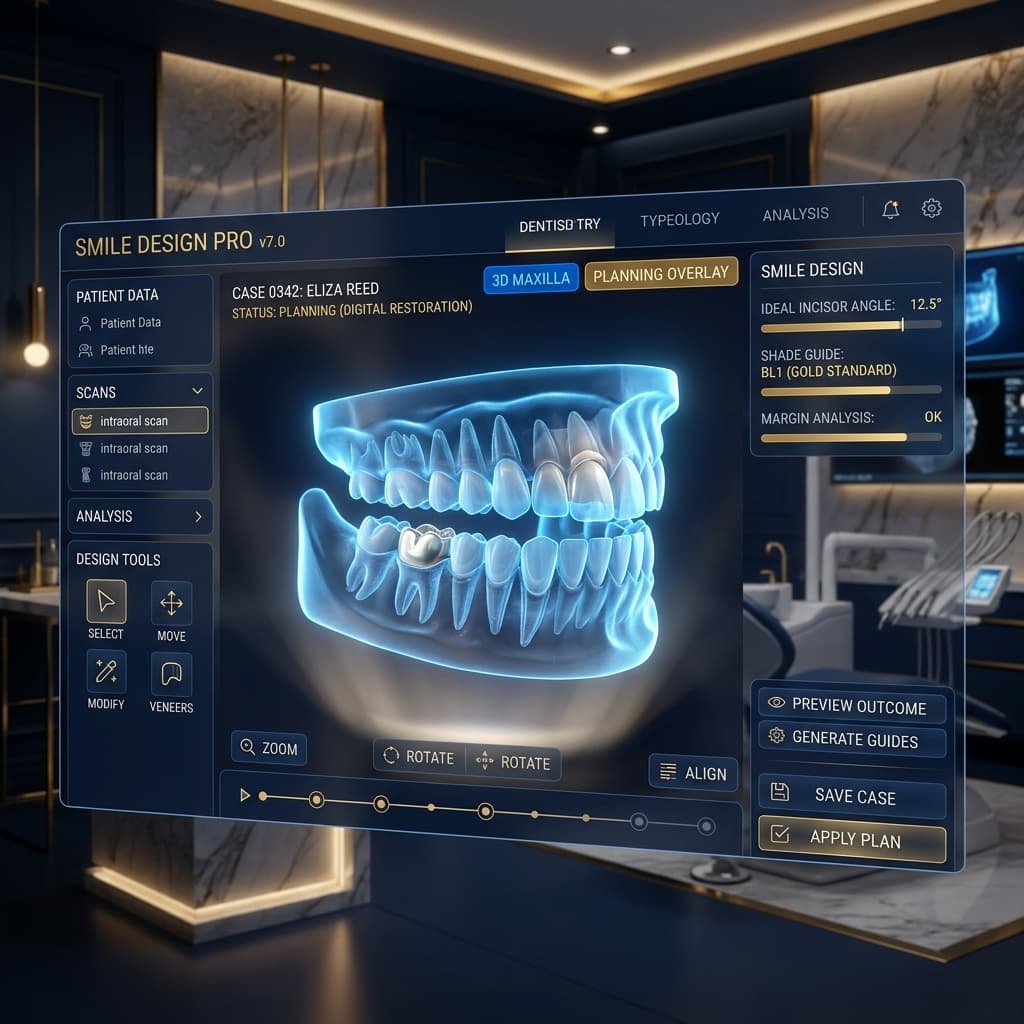
An objective medical guide explaining full-arch fixed implant protocols, 3D CBCT bone evaluation, immediate provisional loading criteria, and final hybrid bridge fabrication according to FDA and clinical implant standards.
For individuals suffering from extensive tooth loss (edentulism) or failing dentition, full-arch fixed implant rehabilitation offers a reliable pathway to restore masticatory function, facial aesthetics, and quality of life. The All-on-4® treatment concept—originally developed by Nobel Biocare—utilizes four strategically positioned implants (two straight anterior and two tilted posterior) to maximize available native bone. Meva Clinic coordinates comprehensive dental surgical and prosthetic care with experienced implantologists in Istanbul. Learn more on our Dental Implants and Dental Category Hub.
Clinical Assessment
Would you like a confidential medical review?
Share your treatment question with our international patient team. Suitability and treatment decisions are confirmed by the responsible licensed physician after clinical assessment.
Please do not send sensitive medical documents in your first message. Our team will explain the secure next step.
Biomechanical Principles of Tilted Posterior Implants
By angling the posterior implants up to 45 degrees, the surgeon can anchor implants in dense anterior bone while avoiding anatomical landmarks such as the inferior alveolar nerve in the lower jaw and the maxillary sinus in the upper jaw. This biomechanical configuration frequently avoids the need for extensive bone grafting or sinus lifting procedures, though individual anatomical suitability varies.
Provisional vs Final Restorations and Immediate Loading
Patients often receive a screw-retained provisional acrylic bridge within 24 to 72 hours of surgery. However, immediate provisional loading is not universally guaranteed for every patient: it requires strict surgical criteria, specifically high primary implant stability (insertion torque around 35 Ncm or higher depending on bone density and implant design). Following a 3-to-6-month osseointegration period, the provisional bridge is exchanged for a permanent, high-strength restoration such as a titanium-reinforced zirconium or monolithic hybrid arch.
Individualized Planning: All-on-4 vs All-on-6
Not every patient is a candidate for exactly four implants. In cases of softer bone density, wider jaw anatomy, or heavy masticatory forces, the treating implantologist may recommend six or more implants (All-on-6) for enhanced load distribution. Comprehensive 3D CBCT imaging determines the optimal number, position, and diameter of implants required.
Clinical Assessment
Would you like a confidential medical review?
Share your treatment question with our international patient team. Suitability and treatment decisions are confirmed by the responsible licensed physician after clinical assessment.
Please do not send sensitive medical documents in your first message. Our team will explain the secure next step.
This content is maintained by Meva Clinic’s Clinical Care Team for patient guidance and clinical transparency. Final treatment suitability, operating physician assignment, surgical planning, and medical decisions are confirmed only after medical history review, in-person consultation, diagnostic tests, anesthesia evaluation, and doctor availability.
Meva Clinic Clinical Care
Partner Hospital Quality & Medical Network Standards
JCI Partner Hospitals
ISO / TÜV Quality Standards
Licensed Providers in Türkiye
ISAPS-Affiliated Partner Surgeons
International Quality Management
Accreditation and society references relate to selected partner hospitals, provider institutions, or individual partner surgeons where applicable. Meva Clinic coordinates international patient care through licensed healthcare providers and specialist medical partners.