

Medical Review
Meva Clinic Dental Care Team
Hollywood Smile Design
Total smile makeover using E-Max or Zirconium veneers tailored to your facial proportions.
Meva Clinic Dental Care Team
Patient Care Information
Clinical Governance & Implantology Safety Standards
Clinical Care Guidance
Standardized Full-Arch Implant Rehabilitation & Smile Makeover Pathways
This page has been reviewed under Meva Clinic’s specialist medical review pathway. Final treatment suitability, operating physician assignment, surgical planning, and medical decisions are confirmed only after medical history review, in-person consultation, diagnostic tests, anesthesia evaluation, and doctor availability.
About This Procedure
Why Choose Meva Clinic?
Total smile makeover using E-Max or Zirconium veneers tailored to your facial proportions.
A personalised Hollywood Smile in Turkey is planned around your face, not a template. International patients are guided through a clinical smile design pathway in Istanbul that covers shade, shape, tooth proportion and gum-line planning. Digital smile design and CAD/CAM simulation support the planning, so clinicians can tailor the treatment to your facial anatomy. Depending on clinical indications, the plan may include E-Max veneers, zirconium crowns or implant-supported restorations where missing teeth need restorative support. Coordination covers every step, including tooth preparation, mock-up fittings, bite and occlusion reviews and final cementation, while realistic aesthetic and functional expectations are set from the start. Treatment uses local anaesthesia, typically with around 7–8 hotel nights in Istanbul, and dental travel logistics are coordinated according to the confirmed care plan.
Patient Care Information
Meva Clinic Dental Care Team
Clinical Governance & Implantology Safety Standards
Standardized Full-Arch Implant Rehabilitation & Smile Makeover Pathways
This page has been reviewed under Meva Clinic’s specialist medical review pathway. Final treatment suitability, operating physician assignment, surgical planning, and medical decisions are confirmed only after medical history review, in-person consultation, diagnostic tests, anesthesia evaluation, and doctor availability.
Is This Treatment for Me?
Gummy smile
Misaligned teeth
Total aesthetic reset seekers
Comprehensive International Patient Care Plan
Private airport transfer according to the confirmed care plan
Bosphorus-view partner hotel, according to the confirmed care plan
Dedicated patient support during the confirmed care pathway
Aftercare guidance or materials according to the confirmed treatment plan
Follow-up guidance according to individual medical recommendations
The Clinical Procedure
Full arch rehabilitation with digital smile mapping.
Panoramic 3D X-Ray
High-resolution scanning of the jawbone and dental structure to plan the treatment.
Digital Smile Design
CAD/CAM software is used to plan a smile that matches your facial proportions.
Comfort-Focused Preparation
Minimal contouring of existing teeth under local anesthesia so the restorations fit precisely.
Precision Fitting
Temporary solutions are applied while the premium ceramic materials are crafted in the lab.
Final Bonding
Bonding the final restorations using specialized bio-compatible adhesives.
Bite Alignment Check
Final micro-adjustments are made and your bite and appearance are checked before you fly home.
Recovery & Transformation Journey
Phase 1: Design and Preparation (Days 1–2)
Examination, X-rays and digital smile design, often with a mock-up to preview shape and length. The teeth are prepared under local anaesthesia and temporary veneers or crowns are fitted.
Phase 2: Temporaries and Try-In (Days 3–5)
While the laboratory makes your restorations, you wear the temporaries; mild sensitivity to cold or heat is common. At the try-in, shade, shape and fit are checked and adjusted.
Phase 3: Cementation and Bite Check (Final Days)
The final veneers or crowns are bonded, excess cement is removed and your bite is checked and fine-tuned. A last review confirms everything is ready before you fly home.
Phase 4: Settling In at Home
Over the following weeks your bite and gums settle and any sensitivity usually eases. Careful brushing, flossing and regular dental check-ups help your restorations last; remote follow-up stays available.
The Meva Advantage
"Face-Driven" design for the most natural aesthetic.
Medical Guidelines & Safety Protocols
Treatment pathways are coordinated with selected specialist medical partners and accredited provider institutions, depending on the procedure and doctor assessment. Below are the clinical guidelines, safety protocols, and medical reference documentation for this procedure.
Indicated / Suitable For
- Adults with healthy gums and teeth who want to change the shape, shade, length or proportions of several front teeth
- Patients with worn, chipped, discoloured or uneven teeth where whitening or bonding alone would not meet their goal
- People with small gaps or mild misalignment who are not candidates for orthodontic treatment, or prefer not to have it, after this option has been discussed
- Patients with old crowns or large fillings in the smile zone that need replacing as part of one coordinated plan
- Patients who understand that tooth preparation is irreversible and that veneers or crowns may need replacement over the years
Contraindications / Not Suitable
- Untreated gum disease or active tooth decay, which must be treated and stabilised before any restoration is fitted
- Severe teeth grinding or clenching (bruxism) without willingness to wear a protective night guard
- Teenagers whose teeth and gums are still developing, or pregnancy, when elective aesthetic treatment is usually postponed
- Teeth with too little healthy enamel or structure to support veneers, where crowns or other restorations must be considered instead
- Significant bite or jaw problems that need orthodontic or surgical correction first, or expectations of an unnaturally white result that does not suit the face
Pre-Operative Evaluation & Diagnostic Checks
Clinical & Gum Examination: A check of each tooth, existing fillings and crowns, gum health and oral hygiene, with any decay or gum inflammation treated first.
Dental Imaging: Panoramic X-ray, with 3D imaging where indicated, to assess roots, bone and hidden problems before any tooth is prepared.
Bite & Jaw Assessment: Evaluation of how the teeth meet, signs of grinding or clenching and jaw joint comfort, so restorations are planned to withstand chewing forces.
Digital Smile Design & Mock-Up: Photographs and a digital simulation of shape, length and shade, often with a trial mock-up in the mouth, so the plan is agreed before preparation.
Potential Risks & Complications
In compliance with transparent clinical reporting, Meva Clinic ensures patients are fully informed of the physiological risks associated with surgical procedures through accredited partner-hospital safety protocols where clinically appropriate.
Sensitivity to cold or heat after preparation is common while wearing temporaries and usually eases over the following weeks; careful preparation and well-fitting temporaries help limit it.
Enamel removed to fit veneers or crowns does not grow back, so the teeth will always need a restoration; preparation is kept as conservative as the plan allows.
More extensive preparation, especially for crowns, can irritate the tooth nerve and occasionally lead to root canal treatment; X-rays and measured preparation reduce this risk.
Gums around new restorations can become red or bleed if plaque builds up; precise margins, careful cementation and daily flossing help keep them healthy.
Ceramic can chip, crack or come loose, particularly with grinding or biting hard objects; a night guard and bite adjustment lower the risk, and a damaged restoration can be repaired or replaced.
The new bite may feel different at first and is fine-tuned before you fly home; like any dental restoration, veneers and crowns may need replacement over the years.
Realistic Expectations & Outcomes
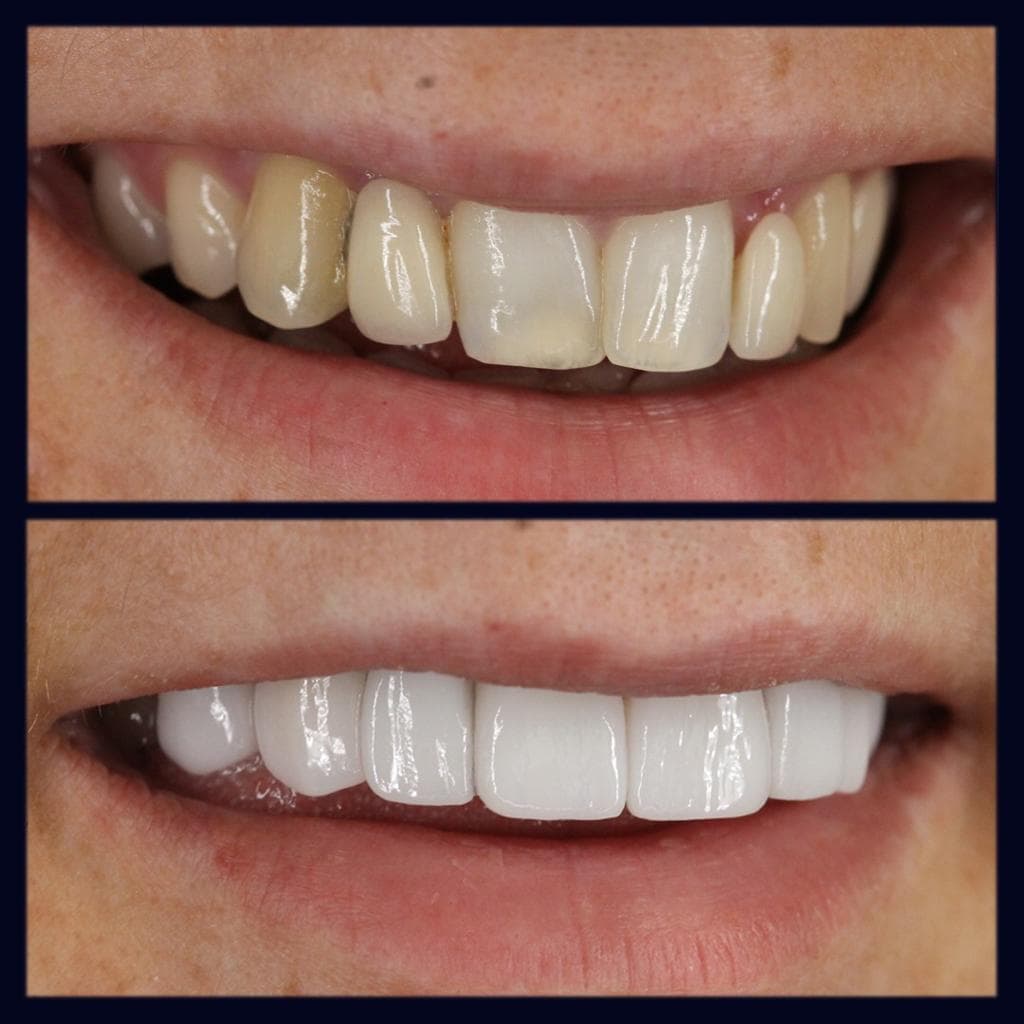
A Hollywood smile can change the shape, shade, length and proportions of the visible teeth and give the smile a more even, balanced look. It does not correct skeletal bite problems, and a gummy smile may need separate gum contouring, which is assessed individually. The treatment involves irreversible preparation of the natural teeth, so it is a long-term commitment: the teeth will always need restorations, and veneers or crowns may need to be repaired or replaced over the years. The final shade is chosen with you, and ceramic cannot be whitened later. Mild sensitivity and the feeling of a new bite usually settle within the first weeks as the gums adapt around the restorations.
Revision & Follow-Up Policy
After you return home, Meva Clinic keeps remote follow-up in place, with reviews in the first weeks and at around 6 and 12 months, alongside regular check-ups with your local dentist. If a restoration chips or debonds, or the bite needs adjustment, the dental team assesses the cause and the options individually. Any repair or replacement is planned according to the clinical findings and the confirmed care plan. For 12 months after your treatment you can also send photos to the medical team whenever you wish and receive their feedback, and your questions are answered remotely.
Authoritative Medical References & Studies
- [1]Alenezi A, Alsweed M, Alsidrani S, Chrcanovic BR. Long-Term Survival and Complication Rates of Porcelain Laminate Veneers in Clinical Studies: A Systematic Review. J Clin Med. 2021;10(5):1074.View Source
- [2]Morimoto S, Albanesi RB, Sesma N, et al. Main Clinical Outcomes of Feldspathic Porcelain and Glass-Ceramic Laminate Veneers: A Systematic Review and Meta-Analysis of Survival and Complication Rates. Int J Prosthodont. 2016;29(1):38-49.View Source
Medical Disclaimer: This page provides general information and is not a substitute for a dental examination. Tooth structure, gum health, bite and aesthetic goals differ between patients. Whether veneers, zirconium crowns or another restoration is appropriate, how much preparation is needed and what result can be expected are decided only after an individual clinical and radiographic assessment by a qualified dentist.
Frequently Asked Questions
Related Treatments
Premium Dental Implants
Straumann & Nobel Biocare systems. long-term restorative option with brand warranty terms depending on implant brand.
Zirconium Veneers & Crowns
Zirconium dioxide restorations in Istanbul: 360° protection for damaged or root-canal-treated teeth, metal-free aesthetics with natural translucency, and a gum-friendly biological fit.
All-on-4 / All-on-6 Restoration
Full-arch reconstruction on 4 or 6 implants. An option for total tooth loss or teeth that can no longer be saved.
Medical Insights & Blog
Digital Smile Design & 3D Imaging: Clinical Applications in Aesthetic Dentistry
Meva Clinic Clinical Care Team
Zirconium Crowns vs Porcelain Veneers: Tooth Preparation, Strength, Esthetics & Candidacy
A comprehensive dental guide examining tooth preparation requirements, structural resistance, bruxism considerations, and longevity factors for zirconium crowns and porcelain veneers according to ADA standards.
All-on-4 Dental Implants: Full-Arch Rehabilitation, Tilted Implant Mechanics & Staged Restorations
An objective medical guide explaining full-arch fixed implant protocols, 3D CBCT bone evaluation, immediate provisional loading criteria, and final hybrid bridge fabrication according to FDA and clinical implant standards.
Procedure Details
Hospital Stay
None
Hotel Package
7–8 Nights
Return to Work
Next Day
Anaesthesia
Local
Clinical Outcomes
Real results from our patients. Witness the transformational outcomes achieved by our expert medical team.