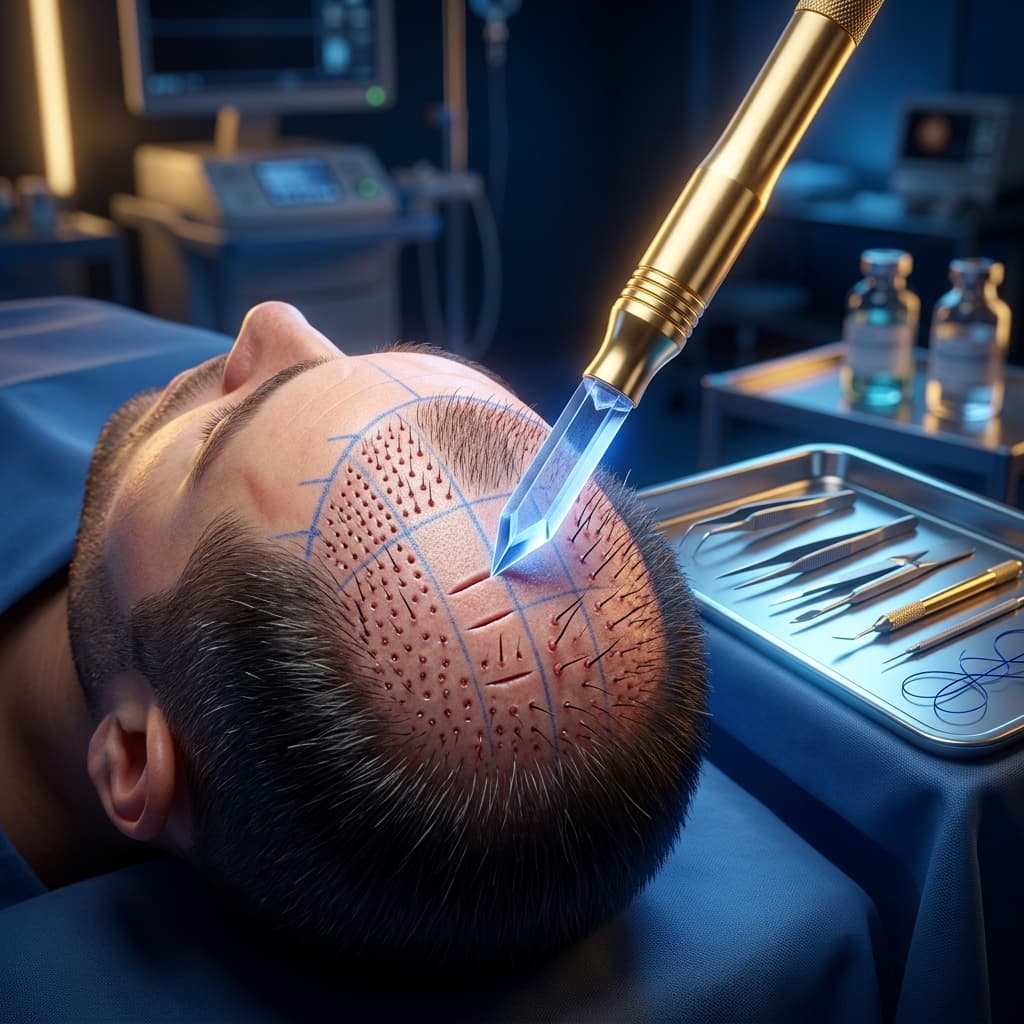
An evidence-based guide detailing postoperative scalp care, crust softening, physiological shedding, and gradual hair shaft maturation according to AAD and ISHRS standards.
Achieving an optimal cosmetic result from hair restoration requires patience and adherence to clinical aftercare instructions. Following follicular unit extraction and placement, transplanted hair grafts undergo biological stages of vascular integration, transient shedding, and subsequent permanent hair production. Meva Clinic coordinates comprehensive follow-up protocols for international patients in Istanbul. Learn more on our Meva Mixed Hair Transplant, DHI vs FUE Comparison, and Hair Restoration Hub.
Clinical Assessment
Would you like a confidential medical review?
Share your treatment question with our international patient team. Suitability and treatment decisions are confirmed by the responsible licensed physician after clinical assessment.
Please do not send sensitive medical documents in your first message. Our team will explain the secure next step.
Early Postoperative Aftercare and Washing Protocols
During the first 7 to 10 days, recipient site micro-incisions form tiny protective crusts. Under the direction of the clinical team, patients apply specialized hydrating foam lotions to soften crusts followed by gentle tapping washes using medical shampoo. Rubbing, scratching, or direct high-pressure shower streams must be avoided to prevent accidental dislodgement of healing grafts. Over the course of the first two weeks, micro-crusts gradually wash away, leaving a clean recipient scalp.
The Shock Loss Phase (Physiological Telogen Effluvium)
Between approximately 2 and 8 weeks after surgery, transplanted hair shedding may occur in many patients. As established by dermatological authorities such as the American Academy of Dermatology (AAD), this temporary shedding (often termed 'shock loss') is a recognized physiological response: surgical trauma shifts follicles into a resting (telogen) phase. The follicular roots and dermal papillae remain healthy beneath the surface to initiate new hair production.
Growth Progression and Realistic Expectations
According to clinical guidance from the AAD and ISHRS, hair regrowth develops progressively and varies widely among individuals. Fine new hairs typically begin to emerge in the months following the shedding phase. Many patients begin to notice visible cosmetic results around 6 to 9 months after surgery. Depending on individual healing dynamics and scalp vascularity, some patients require approximately 12 months or longer to observe their full, mature density. The crown (vertex) region often demonstrates a slower growth rate than the frontal hairline.
Lifetime Graft Growth Assurance & Long-Term Native Hair Care
Meva Clinic provides an approved Lifetime Graft Growth Assurance for transplanted follicles under confirmed post-operative care compliance. This assurance provides corrective touch-up sessions if graft retention falls significantly below expected clinical parameters due to procedural factors. It does not represent a guarantee of 100% graft survival, universal density, or protection against the natural genetic progression of untreated native hair. Ongoing medical therapies may be advised by your treating physician to preserve non-transplanted native hair.
When to Contact the Clinical Care Team
Patients should contact the clinical coordination team promptly if they experience persistent severe pain, significant localized redness or swelling, active bleeding, or signs of localized folliculitis that do not resolve with routine washing.
Clinical Assessment
Would you like a confidential medical review?
Share your treatment question with our international patient team. Suitability and treatment decisions are confirmed by the responsible licensed physician after clinical assessment.
Please do not send sensitive medical documents in your first message. Our team will explain the secure next step.
This content is maintained by Meva Clinic’s Clinical Care Team for patient guidance and clinical transparency. Final treatment suitability, operating physician assignment, surgical planning, and medical decisions are confirmed only after medical history review, in-person consultation, diagnostic tests, anesthesia evaluation, and doctor availability.
Meva Clinic Clinical Care
Partner Hospital Quality & Medical Network Standards
JCI Partner Hospitals
ISO / TÜV Quality Standards
Licensed Providers in Türkiye
ISAPS-Affiliated Partner Surgeons
International Quality Management
Accreditation and society references relate to selected partner hospitals, provider institutions, or individual partner surgeons where applicable. Meva Clinic coordinates international patient care through licensed healthcare providers and specialist medical partners.